
October 29 → November 6, 2026 | Toulouse, France
Ten participants. Six nationalities. Four continents. One shared ambition: contributing to the future of human spaceflight.
After months of preparation, the first-ever Human Spaceflight Certificate (HSC), developed by the Spaceflight Institute (SFI) in partnership with ISAE-SUPAERO, officially kicked off in Toulouse on October 29!
And what a start it has been! From meeting their fellow participants and designing their mission patch to exploring space operations facilities, engaging with leading international experts and receiving a special message from orbit, our first cohort has already experienced an intense and memorable start to its five-month journey.
October 29 & 30: From Individuals to a Crew
The adventure began on Thursday at ISAE-SUPAERO, where our ten participants met each other and the SFI team for the very first time.
As one of the participants, Stéphanie Klumpe, reflected: "The first day meeting everyone was nerve-wracking at first, but it was amazing meeting everybody and learning about them. After that it felt like a normal class."
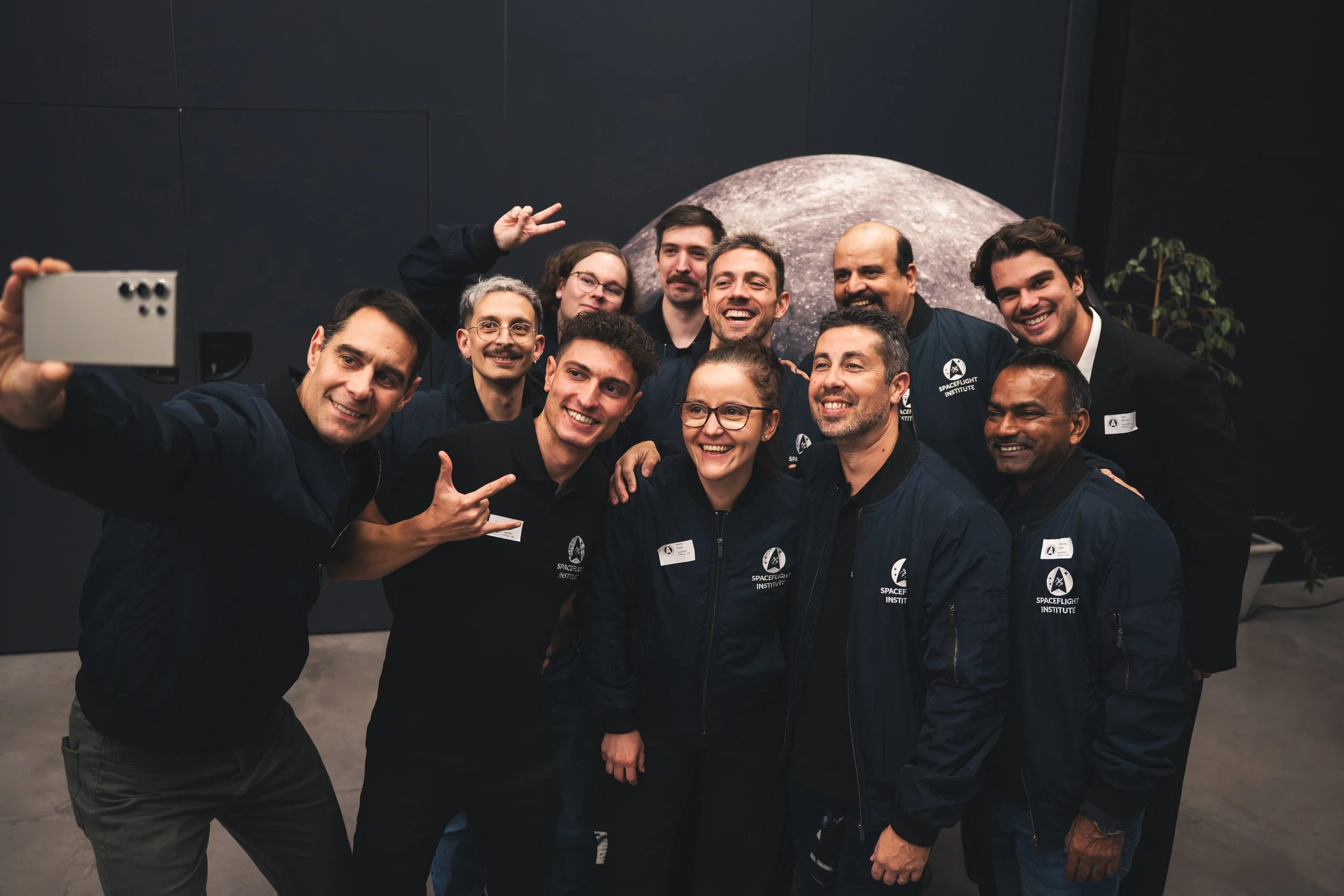
After discovering the campus and their new learning environment, they received their equipment for the coming five months, including their official HSC polo shirts and bomber jackets.
But one of the most symbolic activities of the day was designing their own HSC mission patch. Just like astronaut crews preparing for a space mission, the participants worked together to imagine an emblem representing their collective identity, ambitions and values.
The day also included introductions to the programme’s structure, its learning objectives and the framework that will guide their training.
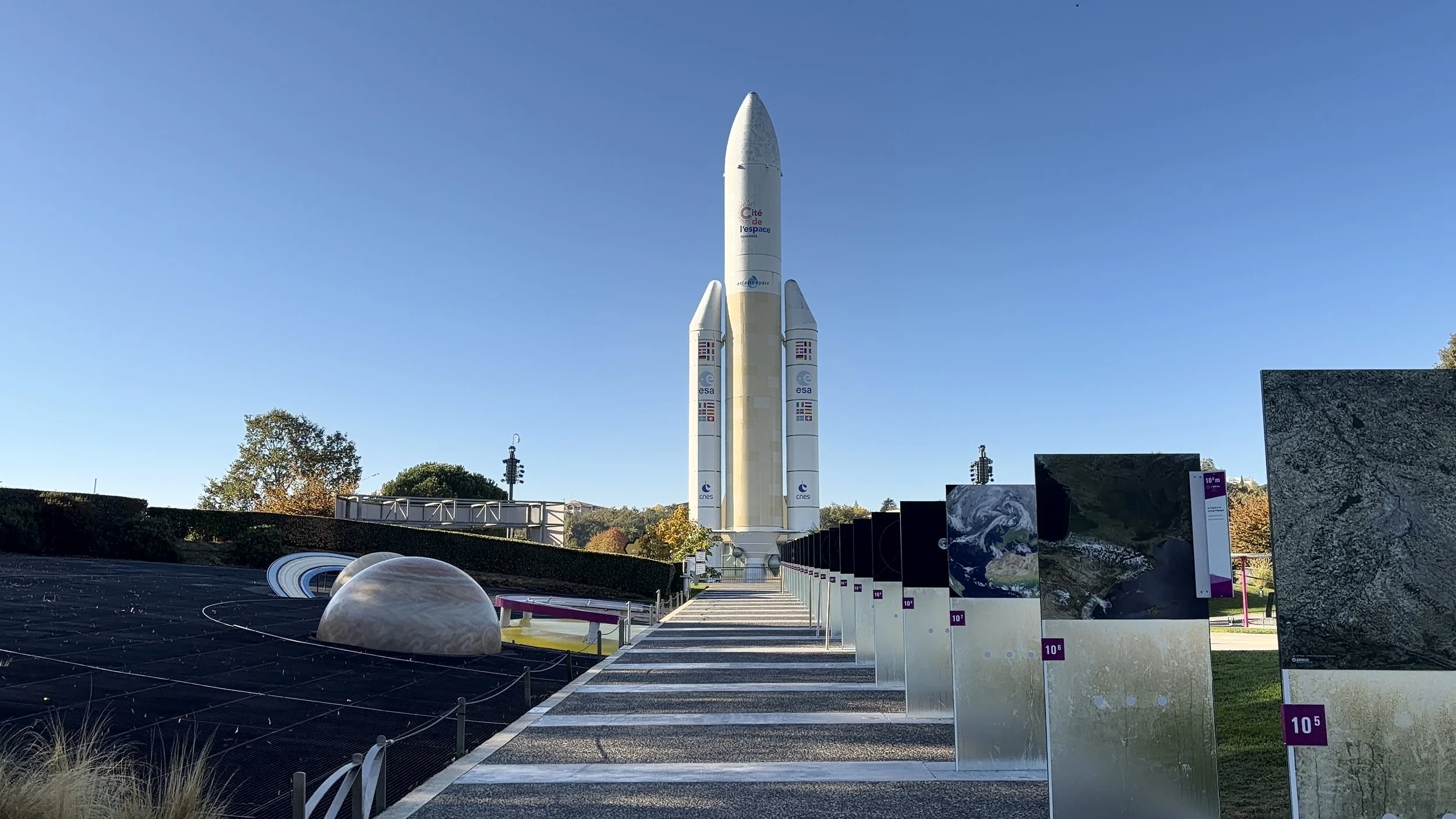
On Friday, the cohort headed to one of Toulouse’s most iconic space landmarks: the Cité de l’espace.
The morning began with Professor Nobuaki Minato from Japan’s Ritsumeikan University, who introduced the participants to leadership, followership and teamwork in intercultural environments.
Through an interactive lunar resource management simulation, the group had to communicate, collaborate and make collective decisions under challenging conditions. An excellent way to discover each other’s strengths and working styles!
After a chance to explore the Cité de l’espace, including its exhibitions and IMAX experience, the afternoon took a more introspective turn.
Psychologist Barbara Saccoccia led the first of several psychology workshops planned throughout the HSC. Rather than focusing on technical knowledge, this session invited participants to reflect on themselves: Why do I want to pursue a career in human spaceflight? Where does this ambition come from? What do I really want to achieve?
These are fundamental questions for professionals preparing to build their careers in a rapidly evolving and demanding sector.
The day concluded with a special visit from Giorgio Saccoccia, President of Vast Europe and former President of the Italian Space Agency, who took the time to meet the cohort, exchange perspectives and discuss the future of commercial human spaceflight.
As Stéphanie shared: "The day at la Cité de l'Espace was great! The activities we had were engaging and enjoyable, plus the scenery was very fitting."
And the team spirit was already taking shape beyond the classroom. That evening, several participants spontaneously gathered to spend time together and reflect on their first two days.
Not a bad beginning for a crew that had only just met!
November 2 & 3: Understanding Human Spaceflight: Past, Present and Future
Following their first weekend discovering Toulouse, the participants returned to ISAE-SUPAERO on Monday for the start of their first full academic week.
The initial lectures established essential foundations: the definitions, history and evolution of human spaceflight, its major milestones and the programmes that have shaped the sector.
On Tuesday morning, Marie-Christine Desjean-Berges, drawing on more than 40 years of experience at CNES, offered a particularly valuable perspective on the history of French human spaceflight.
Beyond the major missions and institutional milestones, participants discovered the strategic decisions, international relationships, successes and setbacks that have shaped France’s role in human space exploration.
An opportunity to hear the stories behind the official history, directly from someone who experienced and contributed to many of its defining chapters.
The afternoon shifted from history to economics.
Space sector expert Maxime Puteaux delivered an in-depth overview of the global space economy, with a particular focus on human spaceflight: its main stakeholders, economic models, market trends and the transformations currently reshaping the industry.
For participants coming from different professional backgrounds, these sessions helped build a shared understanding of both the heritage and the emerging opportunities of human spaceflight.
November 4: From Aerial Yoga to Real Space Operations
Wednesday began with something rather unexpected: aerial yoga!
Suspended in hammocks, participants discovered an activity that will become part of their weekly routine throughout the programme.
Beyond the physical challenge, these sessions are designed to explore stress management, proprioception, body awareness and spatial orientation, including when the usual sense of up and down is disrupted.
As the programme progresses, the exercises will become increasingly challenging, integrating cognitive tasks, problem-solving and operational scenarios.
In the afternoon, the crew visited the CNES in Toulouse, guided by Emmanuel Thulliez, Head of Operations at CADMOS, the French centre supporting scientific experiments aboard the International Space Station.
Participants explored the operations control facilities and laboratories where experiments are prepared, tested and monitored.
They discovered how ground teams use engineering models and dedicated facilities to support astronauts conducting scientific experiments in orbit, troubleshoot technical issues and ensure the successful execution of research activities.
A fascinating opportunity to connect classroom knowledge with the operational realities of human spaceflight.
As one participant noted: "The CNES visit was a special experience being able to see and hear how we communicate with our astronauts."
November 4 (part 2): A Launch Evening to Remember
The day was far from over!
That evening, nearly 100 guests gathered at La Cité in Toulouse to officially celebrate the launch of the first HSC cohort.
The venue carried particular significance. Located within the historic Latécoère aircraft assembly halls, where the pioneers of aviation once helped push the boundaries of what was considered possible, it was a fitting place to welcome a new generation of human spaceflight professionals.
The evening brought together representatives of space agencies, major aerospace companies, institutions, academic partners and HSC experts.
Among the guests were French astronaut Philippe Perrin, CNES Deputy Director Lionel Suchet, and representatives from MEDES, VAST, Airbus Defence and Space and Venturi Space.
But the most unexpected guest was not in Toulouse at all.
NASA astronaut Anil Menon sent a special video message directly from the International Space Station, welcoming our first cohort and taking them on a remarkable tour of the orbital laboratory.
A truly unforgettable moment, connecting the participants’ first steps in the programme with the very environment they are learning to understand.
The evening continued with an aerial yoga performance, live music, a cocktail reception and a live painting by Toulouse-based artist Jazzu, who created a unique artwork celebrating the first HSC cohort. The painting will later find its place in the participants’ classroom.
Beyond the celebration, the evening was also a moment of recognition.
For years, the HSC had existed as an ambitious educational project. Now, its first participants were standing alongside some of the very people shaping the future of human spaceflight.
And their enthusiasm, diversity of backgrounds and already remarkable team spirit certainly made an impression.
November 5 & 6: Challenging Perspectives, Ethics and the First Assessment
After Wednesday’s celebrations, it was straight back to work!
Thursday morning offered an exploration of China’s space programme with Isabelle Sourbès-Verger, CNRS researcher and specialist in international space policies.
The afternoon brought together Alban Guyomarc’h and Clémence Richardeau for an interactive session exploring the future of human spaceflight from a geopolitical perspective.
The discussions covered international competition and cooperation, the growing role of private operators, the transition beyond the ISS, competing lunar ambitions and the strategic choices that may shape the sector over the coming decade.
But the session also challenged a more fundamental assumption: Why should humanity send people into space at all?
What justifies human space exploration? Which arguments stand up to critical examination? And how should governments and private operators balance scientific, economic, political and societal objectives?
These debates are central to the HSC philosophy: preparing professionals who can not only understand the sector, but also question its assumptions and contribute thoughtfully to its future.
On Friday, the focus shifted to two other essential dimensions.
In the morning, Jacques Arnould, a leading expert on space ethics, challenged participants to reflect on the moral responsibilities and societal implications of human space exploration.
The afternoon was dedicated to space law, with Professor Philippe Achilleas exploring the legal frameworks and challenges governing human activities beyond Earth.
These sessions deeply resonated with the cohort as Stéphanie summed up the academic week: "This week was a great introduction to the HSC. We focused mainly on the history and politics of space. The lectures we had surrounding the economics and law of human spaceflight were definitely the highlights in the classroom. These really build on my education as I studied economics in addition to mathematics and I also learned a bit about law thanks to a friend."
And then came a milestone that had generated quite a bit of anticipation: the first weekly assessment!
After an intense week of lectures, discussions, visits and activities, the participants had spent part of Thursday evening revising together and preparing for their first examination.
The result?
All ten participants successfully passed their first assessment!
A fantastic first achievement, and a well-deserved opportunity to enjoy another weekend in Toulouse before the next chapter begins.
One Week Down, Five Months of Adventure Ahead
In just a few days, our participants have gone from meeting each other for the first time to sharing extraordinary experiences, engaging with world-class experts, discovering real space operations and taking their first academic steps together.
And their ambitions are already taking concrete shape outside the classroom, too.
As Stéphanie shared at the end of the week: "During the week, I started work to prepare for the upcoming survival training as well as organizing my notes. During the weekend, NASA announced its next round of astronaut candidate applications, so I got to work updating and cleaning up my resume and starting the application process."
Perhaps even more importantly, something is already emerging beyond the programme itself: a genuine sense of belonging, mutual support and shared ambition.
The first HSC cohort is no longer simply a group of participants. It is becoming a crew.
And this is only the beginning.
Stay tuned for the next edition of HSC in Action, as the crew continues its journey into the world of human spaceflight!